A Christmas Carol (2026)
A Christmas Carol (2026) is a sweeping, visually stunning, and emotionally charged reimagining of Charles Dickens’s timeless tale — a bold new adaptation that brings the classic story to life for a new generation. Directed by Joe Wright (
Atonement, Pride & Prejudice) and starring Ralph Fiennes as Ebenezer Scrooge, the 2026 version combines breathtaking visuals, an atmospheric score, and deeply human performances to deliver a story that feels both hauntingly familiar and profoundly relevant. With a focus on redemption, grief, and the healing power of compassion, this film transforms a Victorian ghost story into a cinematic masterpiece about what it truly means to be alive.

The film opens on a cold, fog-drenched London in 1843, rendered with the painterly realism and emotional grandeur Joe Wright is known for. Ralph Fiennes’s Scrooge is not merely cruel or miserly — he is broken, hollowed by the losses of his youth and the loneliness of his old age. When the ghost of Jacob Marley (Mark Rylance), his long-dead business partner, visits on Christmas Eve wrapped in spectral chains of iron and regret, the story takes on a chilling beauty. Marley warns Scrooge that his time to change is running out — and that he will be visited by three spirits who will show him the truth of his life.
The first, the Ghost of Christmas Past (Florence Pugh), appears as an ethereal figure of light, leading Scrooge through memory like a conductor of time. In a dazzling sequence of shifting vignettes — from his lost childhood to the tender love he once shared with Belle (Vanessa Kirby) — Scrooge is forced to watch how ambition and fear slowly eclipsed the joy within him. Pugh’s performance is both tender and fierce, a haunting reminder that memory can be both gift and punishment. These scenes carry a dreamlike beauty, with Wright using candlelight and slow pans to evoke the ache of nostalgia and the danger of regret.
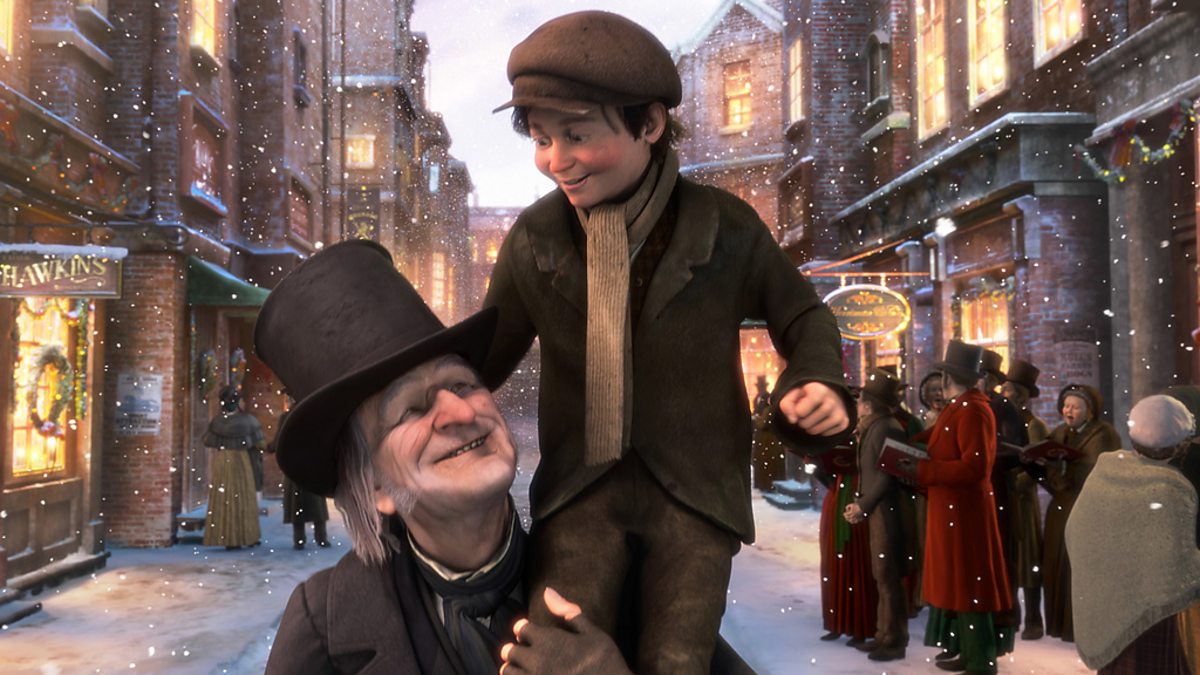
Next comes the Ghost of Christmas Present (Idris Elba), a commanding and warm spirit who shows Scrooge the world as it is — vibrant, struggling, but still filled with love. Through his eyes, Scrooge witnesses the Cratchit family’s humble Christmas, where laughter endures despite poverty and Tiny Tim’s frailty. These moments pulse with humanity, captured through Wright’s signature long takes and naturalistic performances. The Cratchit home, glowing with firelight and hope, stands as a stark contrast to Scrooge’s cold mansion of marble and silence. Elba’s booming laugh and gentle wisdom give the film its emotional heartbeat, reminding Scrooge — and the audience — that generosity is not about wealth, but spirit.
Then comes the Ghost of Christmas Yet to Come (Cate Blanchett), a silent, otherworldly figure who embodies death itself. Her presence transforms the film into a near-operatic vision of fear and awe. The cinematography turns expressionistic — shadows elongate, buildings tilt, and snow falls in thick, suffocating silence. Scrooge’s vision of his own grave, neglected and forgotten, is rendered with devastating stillness. Blanchett’s ghost never speaks, but her presence is magnetic — a reminder that mortality is the great equalizer, and that change must come before it’s too late.
In the film’s cathartic final act, Scrooge awakens on Christmas morning not with bombast, but with trembling joy. Ralph Fiennes delivers a career-defining performance as a man reborn — his laughter breaking like sunlight through fog. He rushes through the streets of London, his face alight with wonder, spreading generosity wherever he goes. The iconic scenes — the turkey for the Cratchits, the reunion with Fred, the whispered apology to his clerk — are rendered with warmth and intimacy, every gesture weighted with newfound gratitude. Dario Marianelli’s sweeping orchestral score crescendos into a hymn of hope and renewal, perfectly complementing Wright’s lush direction.
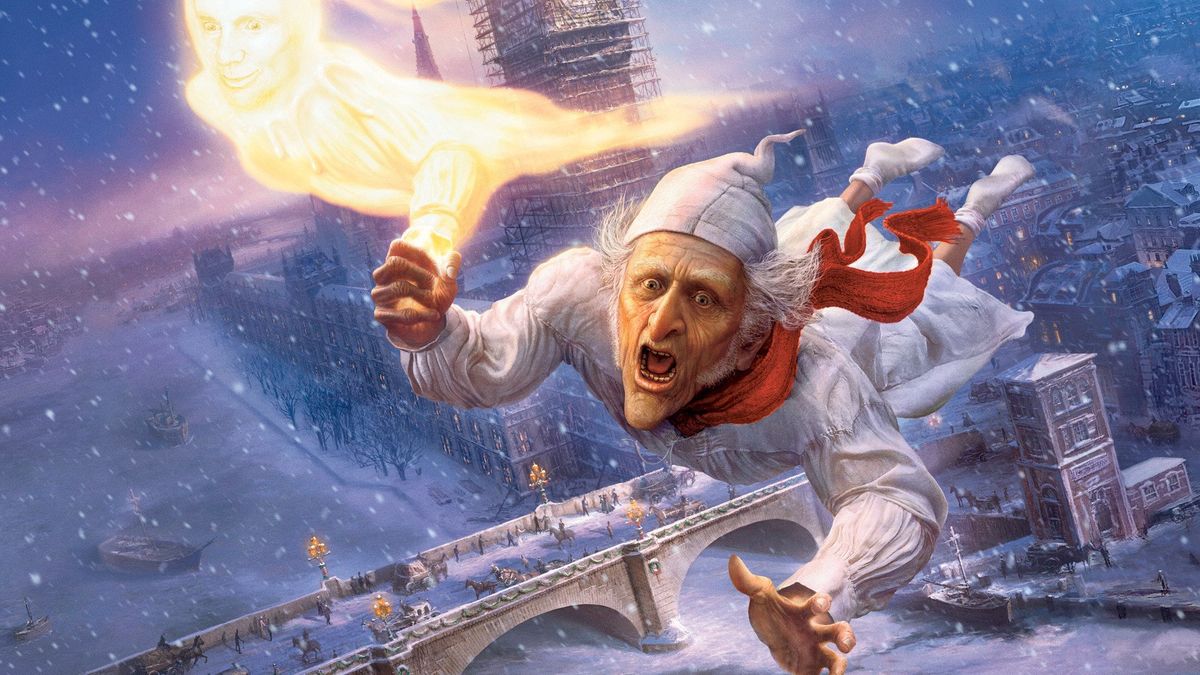
A Christmas Carol (2026) closes with Scrooge standing beneath the flickering gaslights as snow drifts softly around him. He looks toward the heavens — not in fear, but in peace. “I will honor Christmas in my heart,” he says, voice trembling, “and try to keep it all the year.” The camera pans upward through the glowing city as the choir swells, and for a moment, the world feels redeemed. This adaptation is both reverent and revolutionary — a visually magnificent, emotionally resonant reminder that redemption is timeless, and kindness, above all, is the truest miracle of Christmas.