Spoiler Warning: This article contains major spoilers for Yellowstone Season 5, Episode 14, “Life Is a Promise.”
Echoes of a Shared Defiance in Yellowstone’s Final Chapter
Warning: This article contains spoilers for Yellowstone Season 5, Episode 14, “Life Is a Promise.” John Dutton III (Kevin Costner) and Thomas Rainwater (Gil Birmingham) stand as towering adversaries throughout the Yellowstone saga, locked in a century-old dispute over the Yellowstone Dutton Ranch—the largest contiguous ranch in the United States, held by the Duttons for 140 years yet originally stolen from Rainwater’s ancestors.
At first glance, they appear irreconcilable: one a white patriarch defending inherited empire, the other a Native leader reclaiming sacred ground. Yet beneath the surface, their motivations converge in a profound, often unspoken alignment. This shared purpose crystallizes in a striking parallel between Rainwater’s ominous threat in Season 1 and John’s defiant gubernatorial speech in Season 5—proof that both men, despite their rivalry, are preservationists fighting the same modern enemy: progress that devours the land. As the series concludes with Kayce selling the ranch to the Broken Rock Tribe, this linguistic and philosophical echo not only reveals their hidden kinship but justifies the finale’s radical resolution.
From Threat to Manifesto—The Evolution of “The Opposite of Progress”
The phrase “I am the opposite of progress” originates in Yellowstone Season 1, during Thomas Rainwater’s tense jailhouse confrontation with John Dutton. Imprisoned for refusing to return stray Dutton cattle, Rainwater—clad in orange and unflinching—declares:
“I am the opposite of progress, John. I am the past catching up with you.”
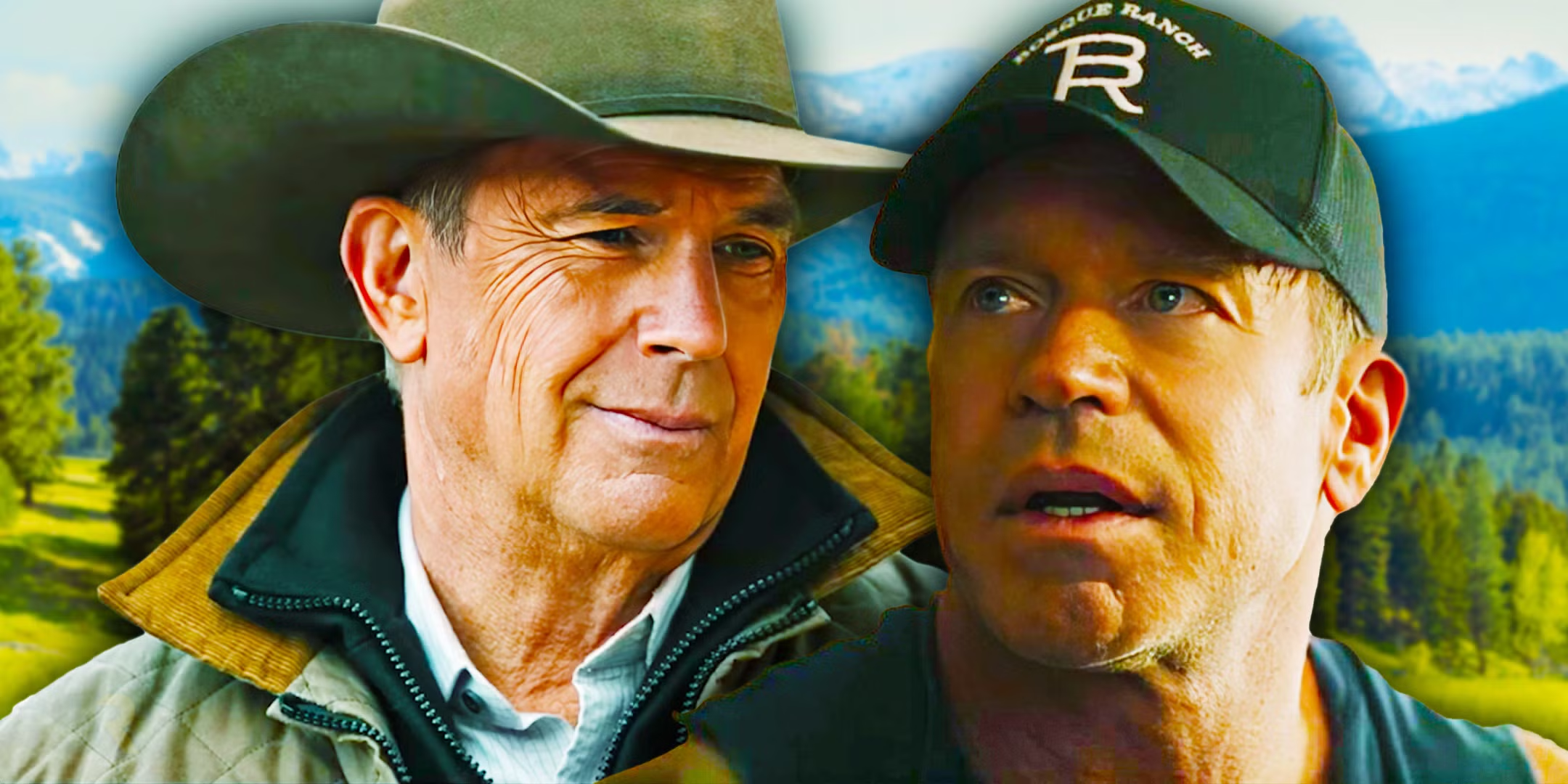
It is a warning, a promise, and a philosophical stake in the ground: the land’s original stewards will not yield to erasure. Years later, when John assumes the governorship to block Market Equities’ airport development, he repurposes the line almost verbatim: “I am the opposite of progress. I am the wall that it bashes its head against, and I will not be the one that breaks.” Whether conscious homage or subconscious resonance, John’s adoption of Rainwater’s words transforms a tribal threat into a political manifesto.

This linguistic theft underscores their parallel missions. Rainwater seeks to reclaim Paradise Valley through casino wealth, vowing to restore it to wilderness. John fights to preserve his family’s ranch from concrete and runways. Both view unchecked development as existential violence against Montana’s soul. Over time, external threats—the pipeline, corporate land grabs—force them into uneasy alliance.
Beth later acknowledges this shift, telling Rainwater that her father respected him. In the Season 5 finale, Rainwater fulfills his early promise, not through conquest but stewardship: the Broken Rock Tribe acquires the ranch, dismantles its structures, and begins restoring the land to its pre-colonial state. Kayce’s sale, born of vision and necessity, aligns with both leaders’ deepest convictions—protection above possession.
A Justified End—Preservation Through Surrender
The mirrored slogans of John Dutton III and Thomas Rainwater illuminate why Yellowstone’s finale, though shocking, is narratively and thematically inevitable. For seven generations, the Duttons bled to defend the ranch against developers, miners, and tourists—a war John wages until his death leaves Beth and Kayce crushed under inheritance taxes and corporate siege.
Kayce’s Season 4 visions foretold this crossroads: choose the land or their sanity. Selling to the Broken Rock Tribe is not defeat—it is transcendence. The land remains whole, wild, and protected, now under guardians who share the Duttons’ reverence for it.

John would never have chosen this path, yet his own words—“I will not be the one that breaks”—find fulfillment in his son’s sacrifice. By returning the ranch to Rainwater’s people, Kayce honors the past catching up, becoming the wall that progress finally shatters against. The alignment between John and Thomas—two men who began as enemies and ended as ideological twins—justifies the ending.
Yellowstone does not conclude with loss, but with convergence: the Dutton legacy endures not in ownership, but in the land’s unbroken survival, guarded now by those to whom it truly belonged all along.
Also Read: ‘Yellowstone’ Fans Are Seriously Divided After a Major Question Comes Up About the Sh0w